
How to Read a Painting: A Step-by-Step Guide for Beginners
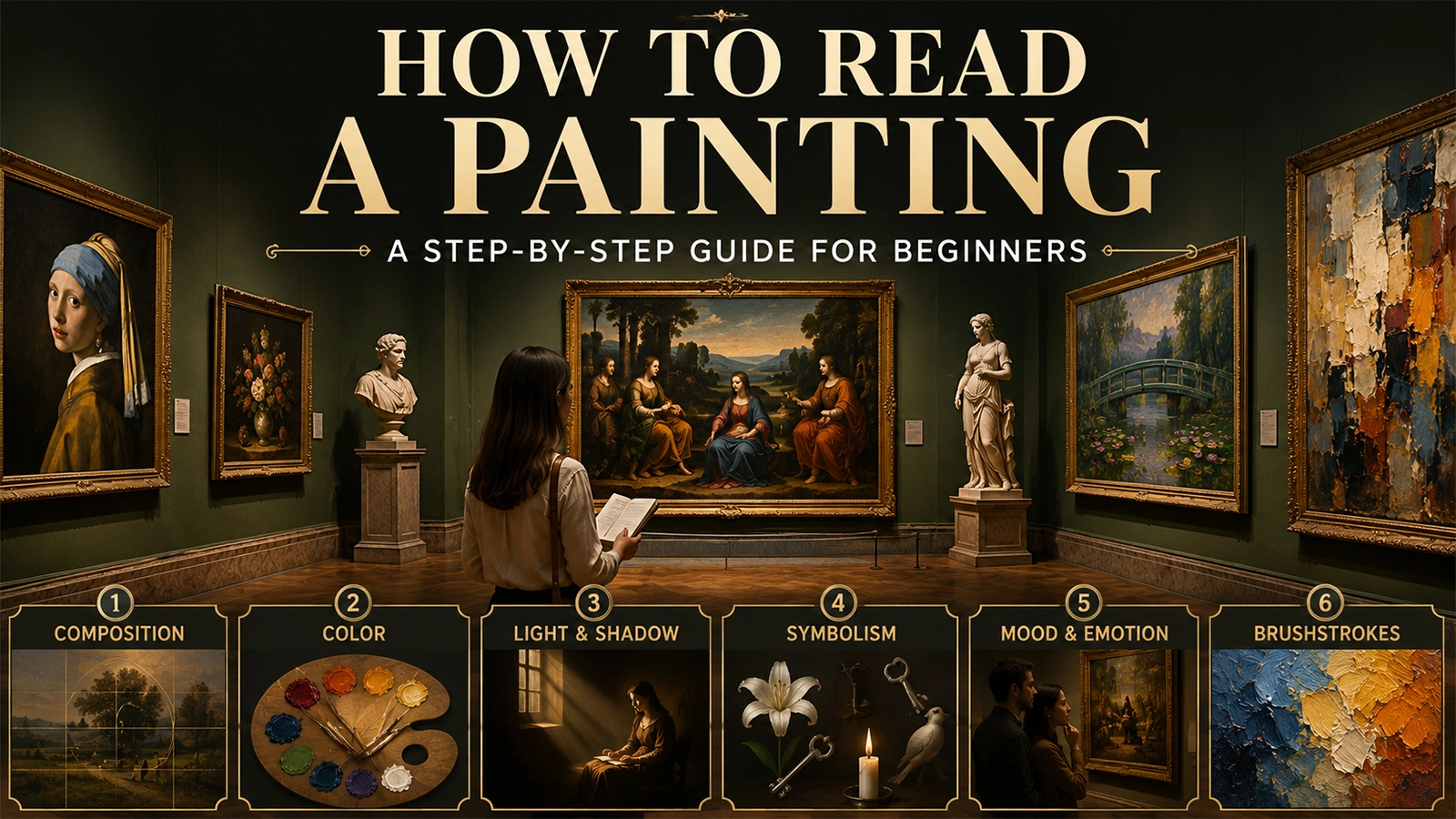
Learning how to read a painting is one of the most rewarding skills you can develop as an art lover, and the good news is that anyone can do it. You do not need a degree in art history or a specialist vocabulary to stand before a canvas and understand what it is trying to say. Reading a painting simply means slowing down, looking carefully, and asking a few thoughtful questions. In this step-by-step guide for beginners, we will walk through a clear method for understanding art — from the way a scene is arranged to the feelings it stirs in you — so that your next museum visit becomes a conversation rather than a quiet stroll past pretty pictures.
Why Learning to Read a Painting Matters
Most of us glance at a painting for a few seconds before moving on. Studies of museum visitors have repeatedly found that the average person spends less than half a minute in front of any single work. Yet a painting is not a photograph to be scanned; it is a carefully built world in which every choice — the placement of a figure, a streak of gold light, a shadow in a corner — carries meaning. When you learn to read that world, ordinary looking becomes genuine seeing.
Art appreciation for beginners is really about building confidence. You already have everything you need: eyes, curiosity, and your own emotional responses. The steps below give those instincts a structure. Think of them as a friendly checklist rather than a rulebook. Over time, this way of analyzing paintings becomes second nature, and you will find yourself noticing details that once slipped past unseen.
Before You Begin: Slow Down and Look
Before applying any method, give yourself permission to just look. Stand a comfortable distance from the work — far enough to take in the whole image, then close enough to see the surface. Let your eyes wander without judging. Notice your very first impression, because that instinctive reaction is valuable information. Only after that first honest look should you begin to break the painting down into its parts.
The 6 Steps to Read a Painting
Here is a simple, repeatable framework for understanding art. Work through these six steps in order, and you will have a rich reading of almost any painting you encounter.
Step 1: Composition — How the Painting Is Arranged
Composition is the arrangement of everything within the frame: where the main figures sit, how objects are balanced, and how your eye travels across the surface. Ask yourself where you look first, and then where your gaze goes next. Artists guide this journey deliberately. A strong diagonal, a path leading into the distance, or a pointing hand can pull your attention exactly where the painter wants it.
Look for balance, too. Is the weight of the image spread evenly, or does one side feel heavier? Many artists use a rough rule of thirds, placing key elements off-centre to create energy. Others build a stable triangle of figures to suggest calm and order. Notice repeated shapes and lines, because rhythm in composition is what makes a scene feel unified rather than cluttered.
Step 2: Color — The Emotional Language
Color is one of the fastest ways a painting speaks to us. Warm colors — reds, oranges, yellows — tend to advance toward the viewer and can feel energetic, passionate, or cheerful. Cool colors — blues, greens, violets — recede and often read as calm, distant, or melancholic. Notice whether the palette is broad and vivid or limited to a narrow range of related tones.
Pay attention to contrast as well. A single spot of bright red in an otherwise muted painting will draw your eye instantly and probably marks something important. Complementary colors placed side by side, such as blue and orange, create vibration and drama, while a harmonious palette of neighbouring hues feels gentle and unified. When you analyze paintings, ask what the color is doing to your mood, not just what the objects happen to be.
Step 3: Light & Shadow — Where the Drama Lives
Light shapes how three-dimensional and how theatrical a painting feels. Find the light source first: is it a single strong beam, soft daylight, or an unearthly glow with no obvious origin? The contrast between light and dark, known by the Italian term chiaroscuro, can turn a quiet scene into something intense. Dramatic, spotlight-style lighting — a technique often associated with Baroque painters such as Caravaggio — makes figures leap from deep shadow.
Softer, more even light tends to feel peaceful and intimate. Notice how shadows fall, because they tell you the time of day, the weather, and the emotional temperature of the moment. Light and shadow are also practical tools: they model form, giving a face roundness or a fold of cloth its weight.
Step 4: Subject & Symbolism — Reading the Clues
Now consider what is actually depicted. Identify the subject plainly first — a portrait, a landscape, a bowl of fruit, a religious or mythological scene. Then look for symbolism, the hidden layer of meaning packed into objects and gestures. For centuries, painters have used a shared visual language: a skull hints at mortality, a dog can signify loyalty, a wilting flower suggests the passing of time, and a single lit candle may stand for the fragility of life.
Symbolism rewards curiosity. You do not need to decode every reference on the spot; even noticing that objects might mean something deepens your reading. Museum labels and guides often explain these clues, which is why they are worth a moment of your time.
Step 5: Mood & Meaning — What the Painting Feels Like
By this stage you have gathered evidence from composition, color, light, and subject. Now bring it together to sense the overall mood. Is the painting joyful, tense, serene, mournful, or mysterious? Ask how the artist achieved that feeling. Perhaps cool colors and a low light source create a hush; perhaps a swirling composition and hot reds create unrest.
Meaning is where your own response counts most. Two people can read the same painting differently, and both readings can be valid. Trust what you feel, then trace it back to the choices the artist made. This connection between technique and emotion is the heart of understanding art.
Step 6: Context — The Story Around the Frame
Finally, place the painting in its world. When and where was it made? What was happening in the artist’s life or society? A work created during a war, a plague, or a personal loss carries a weight that pure looking cannot fully reveal. Knowing that Impressionist painters worked outdoors to capture fleeting light, or that certain portraits were commissioned to display wealth and power, adds meaning without replacing your own eyes.
Context is best used as a final layer, not a first one. Look closely on your own terms first, then let the background information confirm, complicate, or enrich what you have already discovered.
Quick Tips for Analyzing Paintings Like a Pro
Keep these practical reminders in mind on your next visit. They will help you build the habit of careful looking:
- Give it time. Spend at least two full minutes with a work before deciding what you think.
- Step back, then lean in. View the whole composition from a distance, then move close to study the brushwork and surface texture.
- Follow your eyes. Notice the path your gaze takes and ask what is guiding it.
- Name your feelings. Put a single word to the mood, then find the visual reasons behind it.
- Read the label last. Form your own impression before checking the title, date, and description.
- Ask questions out loud. Wondering “why is this figure turned away?” often unlocks the whole picture.
- Compare nearby works. Setting two paintings side by side sharpens what makes each one distinct.
Don’t Overlook the Brushwork
One detail beginners often miss is brushwork — the visible marks of the artist’s hand. Smooth, invisible brushstrokes create a polished, lifelike finish, while thick, loaded strokes, called impasto, add texture you can almost feel. Loose, energetic marks convey movement and spontaneity; tight, controlled ones suggest precision and calm. Getting close enough to see how the paint was applied reconnects you with the living person who made the work, brush in hand, one decision at a time.
A painting is not a puzzle with a single correct answer. It is an invitation to look slowly, feel honestly, and keep asking questions long after you have walked away. The moment you stop hunting for the “right” interpretation is the moment art truly opens up to you.
Putting It All Together
Reading a painting is a skill that grows with practice. On your first attempts, you might only manage two or three of the steps, and that is perfectly fine. As you visit more exhibitions and spend more time looking, the process will speed up until composition, color, light, symbolism, mood, and context all register almost at once. What begins as a deliberate checklist becomes an effortless way of seeing. If you would like to go deeper into what separates a good painting from a truly enduring one, our guide to what makes a painting a masterpiece is a natural next step.
Frequently Asked Questions
How long should I spend looking at a single painting?
There is no fixed rule, but aim for at least two minutes with any work that interests you. That may feel long at first, yet it is the amount of time most people need to move past a surface glance and start noticing composition, light, and detail. With a painting that truly grips you, do not be surprised if ten or fifteen minutes pass without you realising.
Do I need to know art history to understand a painting?
Not at all. Art appreciation for beginners starts with careful looking and honest feeling, both of which require no prior knowledge. Historical context adds a valuable layer, but it comes last in the process, not first. Trust your eyes and your reactions; the background information will make more sense once you have already engaged with the work directly.
What if I don’t like a famous painting everyone praises?
That is completely normal and nothing to worry about. Taste is personal, and even celebrated masterpieces will not speak to everyone. Rather than forcing admiration, use the disagreement as a prompt: ask why the work leaves you cold and why so many others admire it. That gentle friction often teaches you more about your own taste than easy agreement ever could.
Start Reading Paintings for Yourself
Now that you know how to read a painting, the only thing left to do is practise. Choose one work on your next visit and walk through all six steps — composition, color, light, subject and symbolism, mood, and context — without rushing. You will be amazed at how much more a single canvas can offer when you give it your full attention. To make the most of your trip, read our ultimate guide to visiting a painting museum before you go, and explore more beginner-friendly articles on our blog. The paintings are waiting — all you have to do is look.